Four colonial boundary markers found on Gambia-Senegal border in Sandu
By the AFREEQUE newsroom, based on Foroyaa
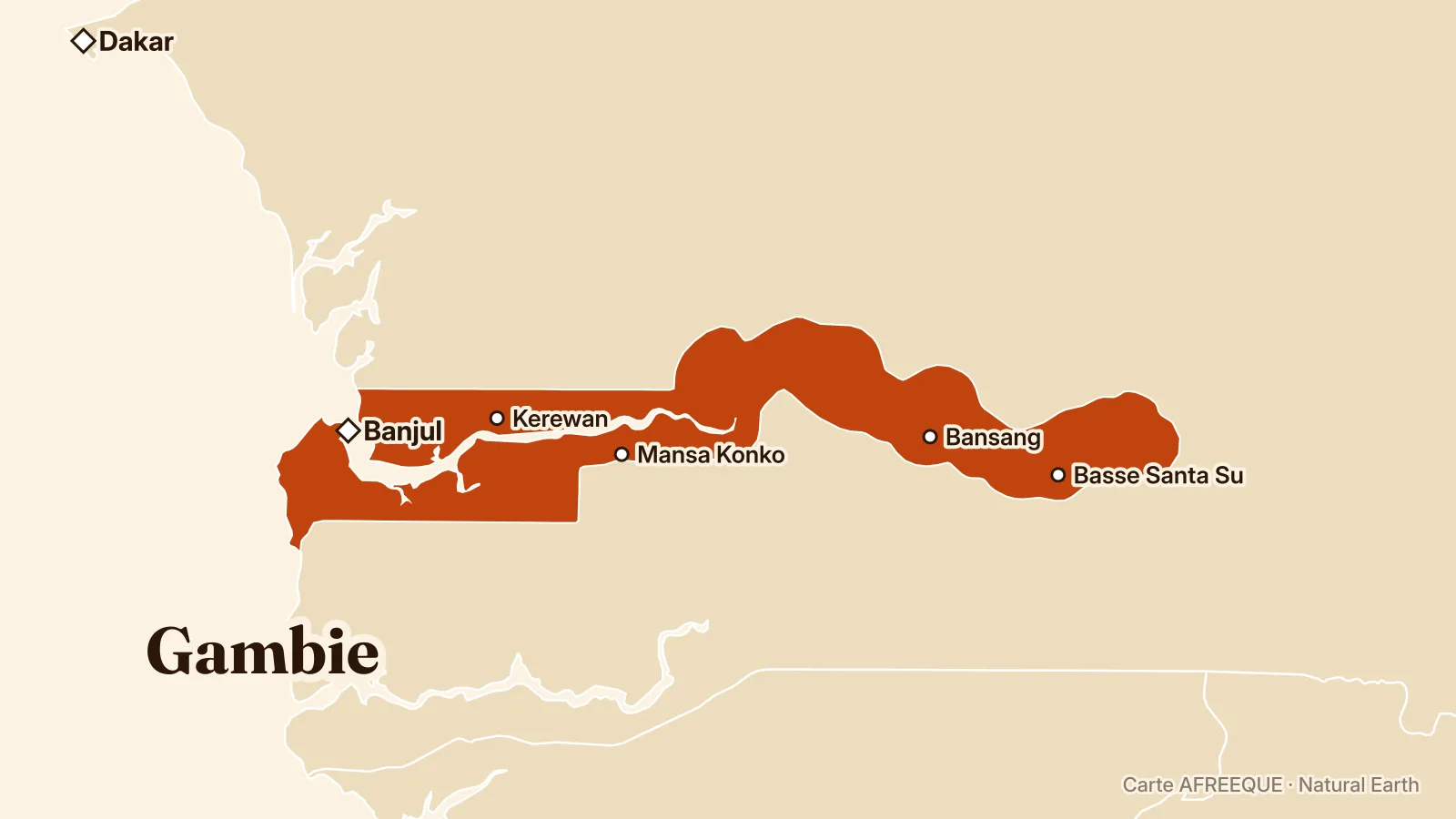
Gambian and Senegalese technical teams have found four intact colonial boundary markers in Sandu district, The Gambia. Their discovery clarifies a disputed section near the villages of Sare Yerore and Sare Diam Golore, where communities had experienced tensions over farmland and forest resources, Foroyaa reports, citing the Gambian National Centre for Arts and Culture.
Joint technical teams responsible for demarcating the border between The Gambia and Senegal have found four intact colonial boundary markers in Sandu district, in the Upper River Region, according to the Gambian National Centre for Arts and Culture (NCAC). The markers were discovered between the Gambian community of Sare Yerore and the Senegalese community of Sare Diam Golore, where uncertainty over the border had fuelled tensions over farmland and access to forest resources.
The search benefited from the cooperation of residents, led by Sandu chief Bah, chief of Sare Demba Toro village, as well as elders and young people from Sare Diam Golore. The teams used maps and colonial documents dating from 1904, kept and supplied by the NCAC. Some markers were located near old seasonal water points or in dense vegetation.
After confirming the locations of the old markers, the joint commission installed new primary and secondary markers along the section concerned. The NCAC believes that this demarcation will make the border more visible, reduce tensions over land use and encourage coexistence between communities linked by historical, cultural and family ties.