Washington courted by Myanmar’s junta over rare earths
By the AFREEQUE newsroom, based on Daily Maverick, TimesLIVE and Sowetan
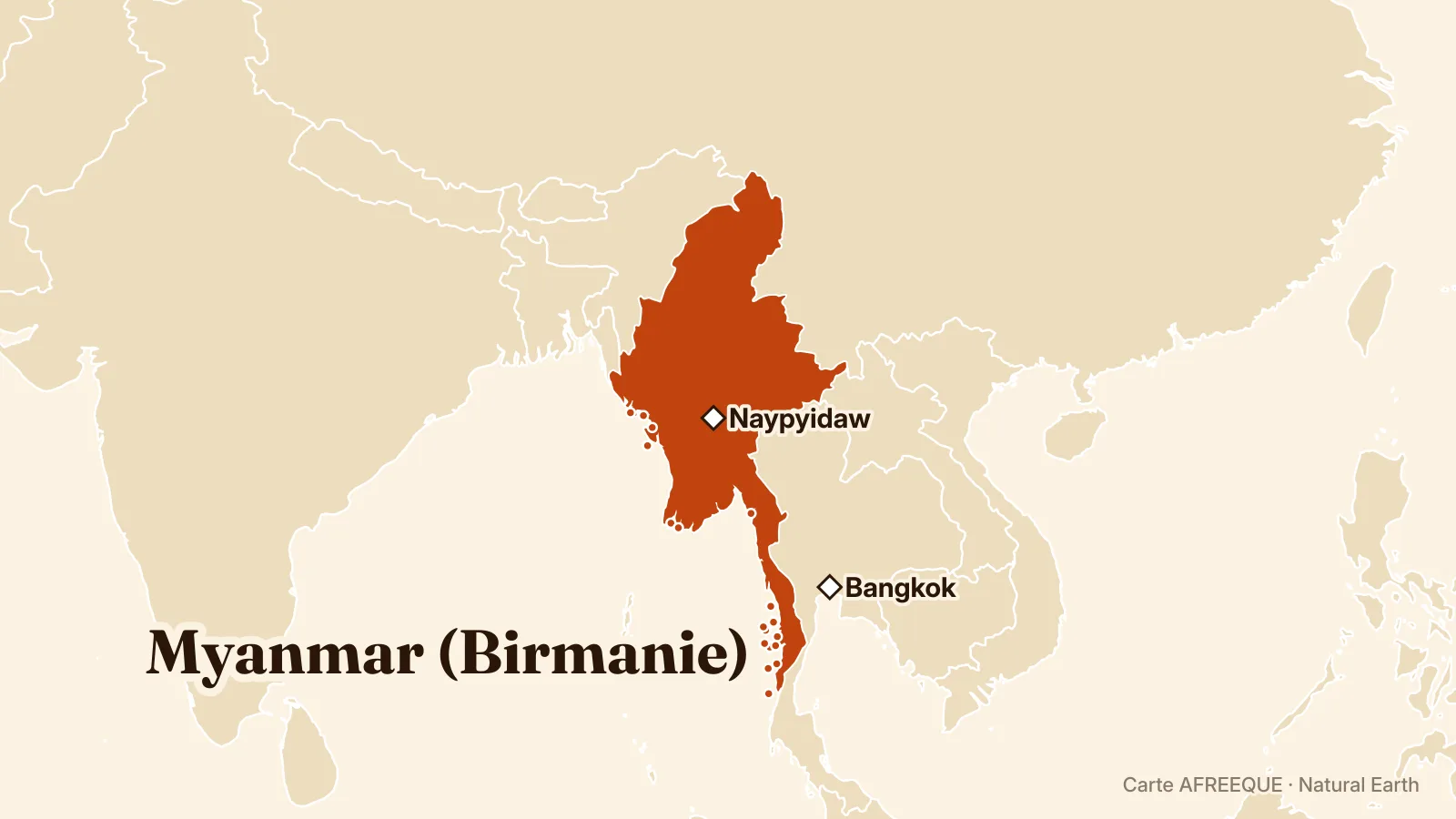
The US State Department is considering expanding its influence in Myanmar and gaining access to its rare earth deposits, according to a strategy published last week and relayed by Daily Maverick. It targets at least three contracts worth more than $5 million each for American companies, a threshold deemed “modest” by the DCI Group, which acts for Myanmar’s Ministry of Information.
Myanmar’s military government is urging Washington to step up its rapprochement efforts and invest quickly in the country’s rare earth mines, a sector largely dominated by China, its powerful neighbour. The DCI Group, which acts for Myanmar’s Ministry of Information, presents Myanmar as a priority in critical minerals, according to a newsletter published on Monday, and calls on the United States to treat it as such rather than as a mere diplomatic matter.
The firm believes minerals are the natural ground for this rapprochement, as they link Myanmar’s economic potential to US national security and supply chains. It considers the target of three contracts modest, given the country’s resources and Washington’s stated ambition to rival Beijing.
Mired in civil war since the military coup of 2021, Myanmar is one of the world’s main sources of heavy rare earths, exported mostly to China, which produces about 90% of rare earth magnets and has recently tightened state control over the sector. The main production sites in the north, in Kachin State, are controlled by the Kachin Independence Army, a rebel group backed by Beijing. After the coup, Washington froze Myanmar’s assets at the Federal Reserve Bank of New York before resuming direct talks in September.
The State Department did not immediately respond to requests for comment, nor did the Chinese Foreign Ministry or the Myanmar military government. President Donald Trump has made rare earths a national security priority, injecting billions of dollars into several companies to try to loosen China’s grip on the market.