Migration controls shift departures to The Gambia
By the AFREEQUE newsroom, based on Kassataya
Arrivals in Europe of migrants from West Africa fell by 59% in the first half of 2026, to 4,566 people, while departures shifted southwards, particularly to The Gambia. The IOM attributes this change to tighter controls in Morocco, Mauritania and Senegal; on the Atlantic route, the number of dead and missing rose from 1,172 to 1,215 between 2024 and 2025, according to the African Press Agency.
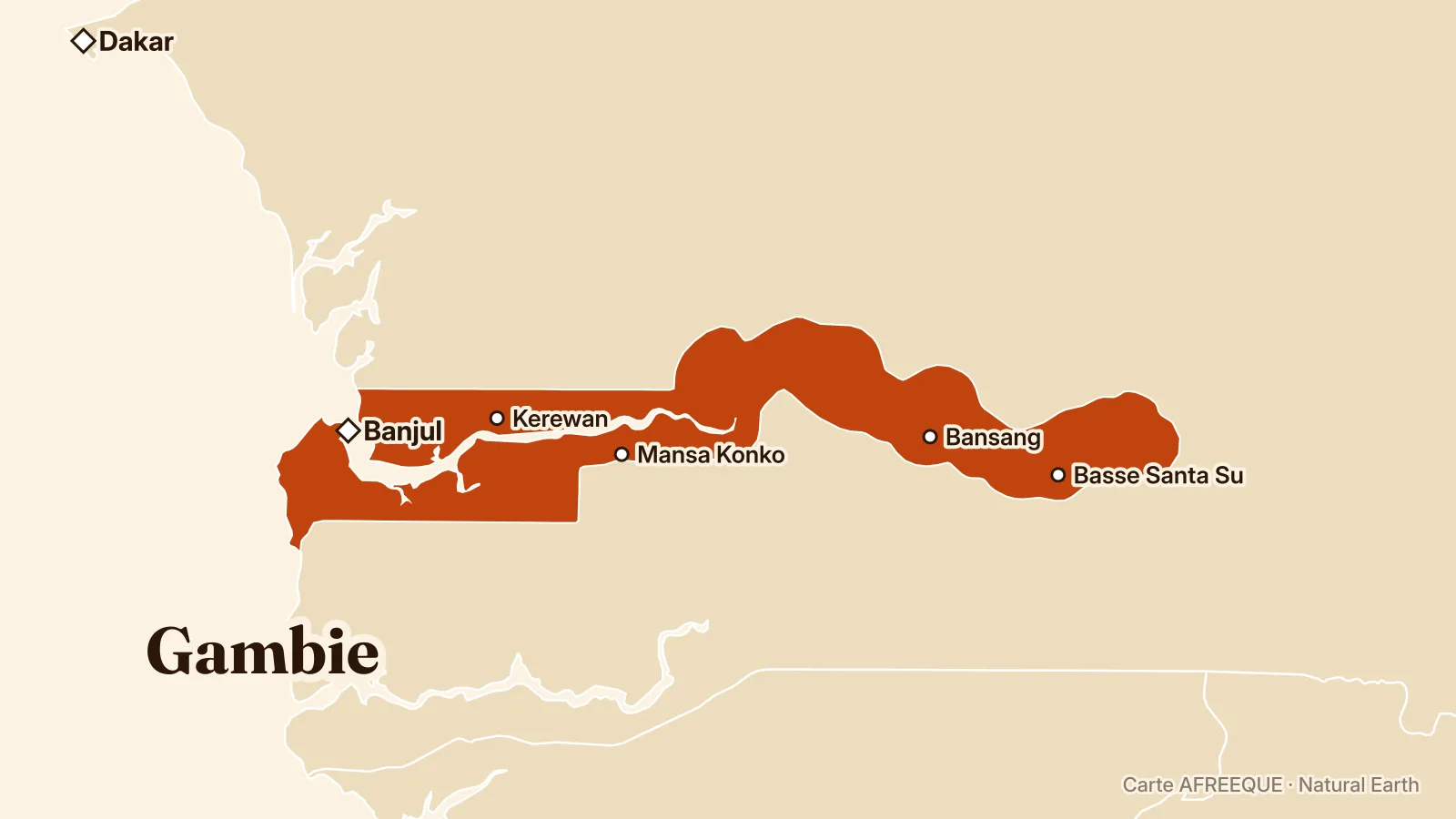
Arrivals in Europe of migrants from West Africa fell by 59% in the first half of 2026 compared with the same period in 2025, to 4,566 people. At the same time, departures for the Canary Islands are shifting southwards, particularly to The Gambia, because of tighter controls in Morocco, Mauritania and Senegal, according to the African Press Agency (APA), citing data from the International Organization for Migration (IOM) published on 14 October.
West African nationals now account for 21.9% of arrivals on the Western Mediterranean route, up from 15.6%. On the Atlantic route to the Canaries, arrivals fell by 62% between 2024 and 2025, but the number of dead and missing rose from 1,172 to 1,215. Crossings departing further south can cover around 2,200 kilometres, 750 kilometres more, exposing passengers to breakdowns, shortages of water and food, and shipwrecks.
On 3 September, a pirogue that had left The Gambia was rescued south of the Canaries after drifting for 26 to 27 days. According to the “In the Migrant’s Footsteps” platform, 45 of the 128 people on board survived and more than 80 died, including an infant. On 31 May, Mauritanian coastguards intercepted a boat from The Gambia carrying 223 people seeking irregular migration, from several West African countries.
On 20 October, 171 migrants were also rescued after their pirogue ran aground at Pilote Bar, in the municipality of Gandiol, in northern Senegal. The Gambia had already experienced a deadly shipwreck, after which 12 bodies were recovered.