
































Cosatu had hoped for a South African interest rate cut
By the AFREEQUE newsroom, based on Congress of South African Trade Unions
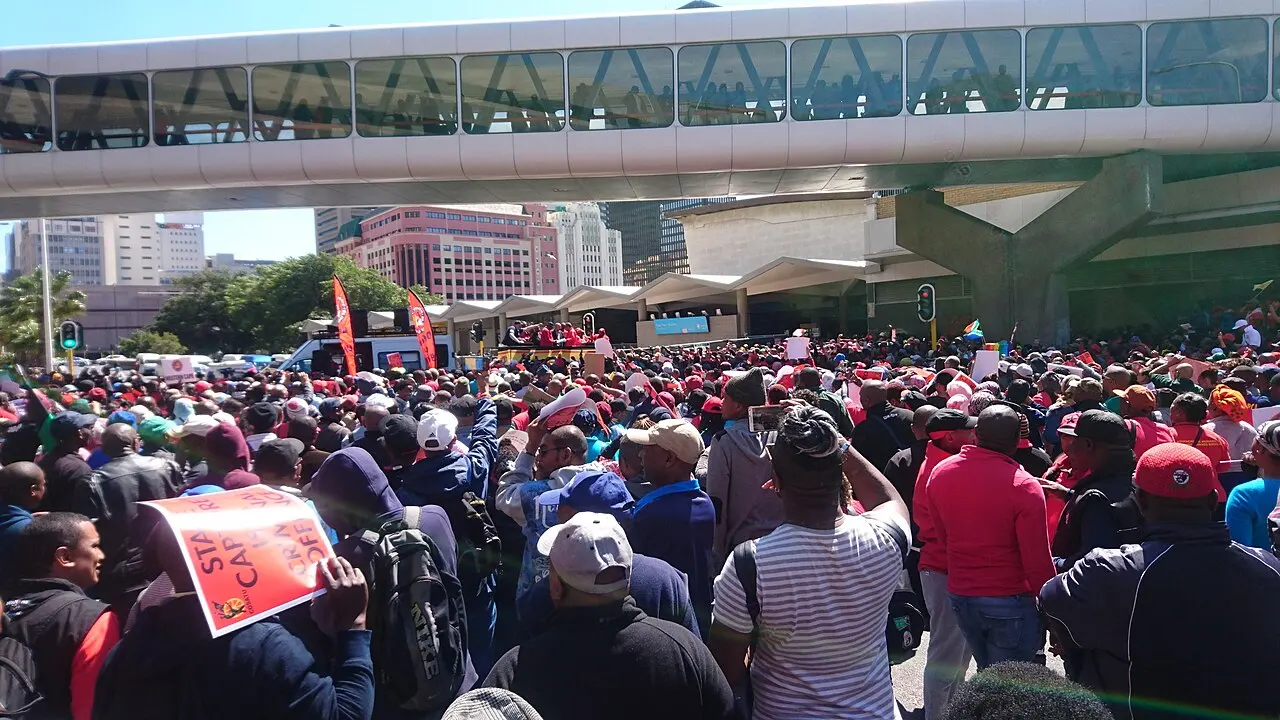
Trade union federation Cosatu had hoped for a cut in the repo rate, which would have eased the burden on heavily indebted workers, and believes an increase would have inflicted unnecessary hardship on them. According to the federation, inflation is driven mainly by the war in the Middle East and rising fuel prices, rather than domestic demand, in a country where unemployment stands at 44%.
South African trade union federation Cosatu wanted a reduction in the South African Reserve Bank’s repo rate, which was maintained at 7.25%. The organisation believes a cut would have supported workers and economic activity, while another increase would have worsened the financial difficulties of indebted households. It made its position known in a statement signed by Matthew Parks, its parliamentary officer.
Cosatu points out that workers are facing a rising cost of living, particularly a 50% increase in fuel prices, which it attributes to the war in the Persian Gulf. Increases in taxi, bus and electricity fares are also weighing on household budgets. According to the federation, some workers spend up to 40% of their income on transport and borrow money to cover their food, energy and travel expenses. It believes that employed people must also support relatives who are without work.
The trade union federation considers that inflation, which has risen to 5.2%, is mainly the result of the conflict in the Middle East rather than domestic demand. It points out that South Africa’s economic growth has stagnated at around 1% for more than ten years. Growth forecasts of 1.4% have been revised down to 1.2%, while Cosatu believes a rate of more than 3% would be necessary to address unemployment, which it puts at 44% in its statement. The organisation hopes that the announced reduction in fuel prices and the tax relief applied in November and December will help ease inflationary pressures.
Cosatu plans to request urgent consultations at Nedlac, South Africa’s forum for dialogue between social partners, to negotiate measures to support households and the economy. In particular, it wants to strengthen support for Eskom, the state-owned electricity company, by addressing the 120 billion rand owed by defaulting municipalities. It is also calling for a review of the fuel price-setting mechanism and reform of the Road Accident Fund, the public fund that compensates victims of road accidents, to limit future increases in the fuel levy. The central bank had previously raised its repo rate to 7.25% in September, as recalled in the increase decided by the institution.