








Three Rwandan tea factories certified carbon neutral
By the AFREEQUE newsroom, based on Rwanda Inspirer and The New Times (Rwanda)
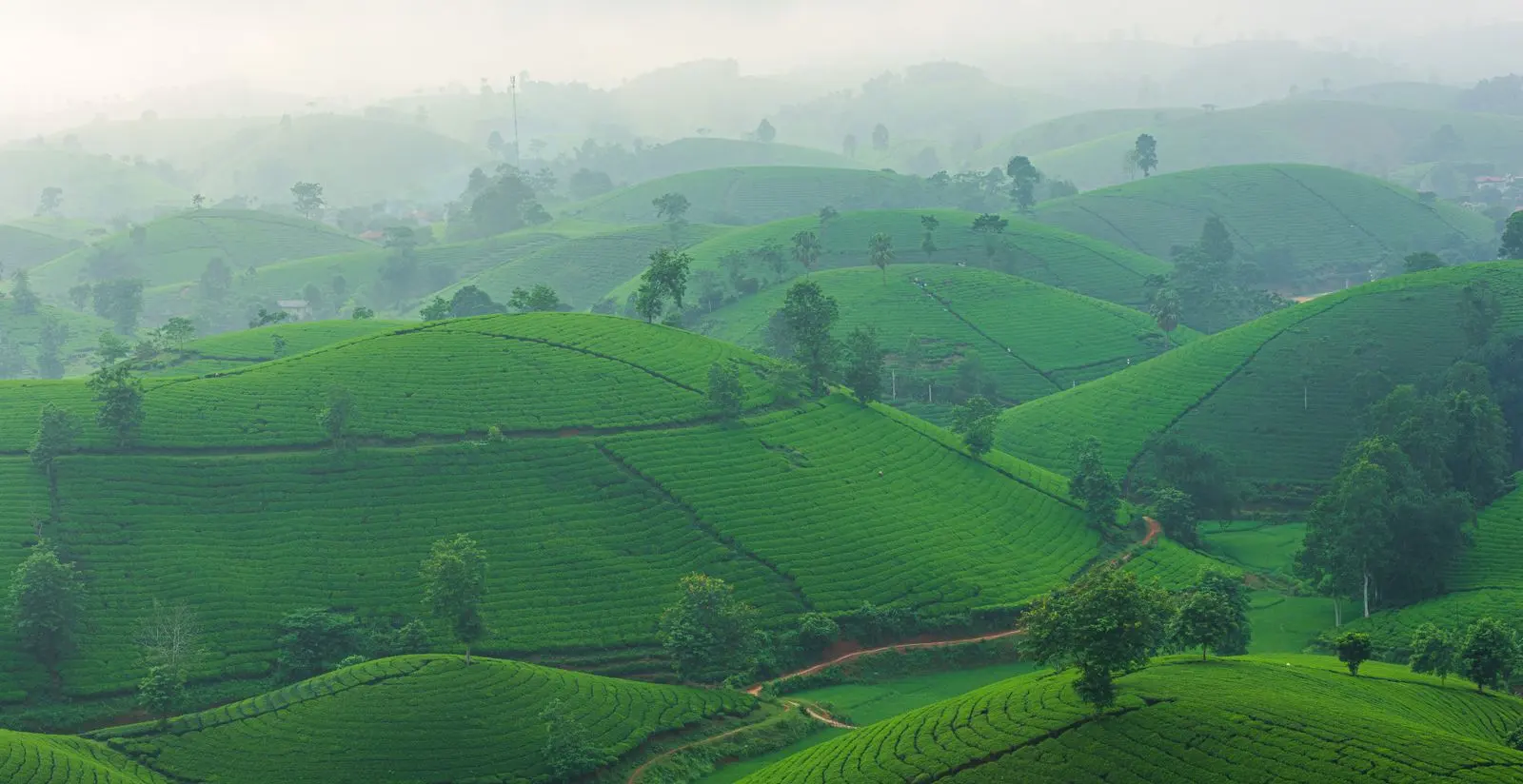 Illustrative image · Duc Nguyen · Pexels · Licence Pexels
Three Rwandan factories, Mulindi, Shagasha and Nshili Kivu, have obtained independent carbon-neutrality certification for their black tea production in 2025. The emissions assessed, estimated at 24,076 tonnes of CO₂e, were offset by approximately 57,002 tonnes of recognised carbon removals, according to The New Times.
The certification was issued on 30 October 2026 by Earthood Services Limited, following an assessment based on the international standards ISO 14068-1:2023 and ISO 14064-3:2019. The programme was launched and coordinated by The Wood Foundation Africa (TWFA), with the Rwandan government and support from the UK Foreign, Commonwealth and Development Office (FCDO). The announcement was made on 24 November.
The assessment recorded 24,076 tonnes of carbon dioxide equivalent emissions from the three facilities, compared with approximately 57,002 tonnes of carbon removed from the atmosphere and recognised within the scope of the assessment. These removals therefore exceeded emissions by 32,926 tonnes. They came notably from plantations and shade trees. The certification applies exclusively to 2025 black tea production and does not guarantee that future production or the entire journey of the product to consumers will be carbon neutral.
In 2025, the three factories collectively received 33 million kilograms of fresh leaves from 14,000 small-scale producers and farms. This raw material was worth approximately 9 million dollars and was used to produce 7.6 million kilograms of tea, valued at 19 million dollars.
David Knopp, TWFA’s managing director, particularly highlighted the role of forest plantations in carbon capture. He cited the sustainable management of plantations owned by the factories, the shared management of public forests and the introduction of high-yield eucalyptus varieties. Olivier Kamana, permanent secretary at the Ministry of Agriculture, called for these practices to be extended across the entire sector so that producers could also benefit from this transition.
Key figures
Africa in data · Commodities
The price of tea (Kenya)
307 cents per kilo
October 2026 average
−0.9% over a month−3.2% over a year
World price, IMF monthly average
The price month by month, over 13 months
Oct 25Oct 26
Africa’s big producers Kenya
 Malawi
 Rwanda
 Uganda
See the figures
| Month | cents per kilo |
|---|---|
| October 2026 | 307 |
| September 2026 | 310 |
| August 2026 | 294 |
| July 2026 | 273 |
| June 2026 | 276 |
| May 2026 | 287 |
| April 2026 | 296 |
| March 2026 | 290 |
| February 2026 | 303 |
| January 2026 | 310 |
| December 2025 | 314 |
| November 2025 | 304 |
| October 2025 | 318 |