NEHAWU criticises South Africa’s budget strategy
By the AFREEQUE newsroom, based on Mediadon
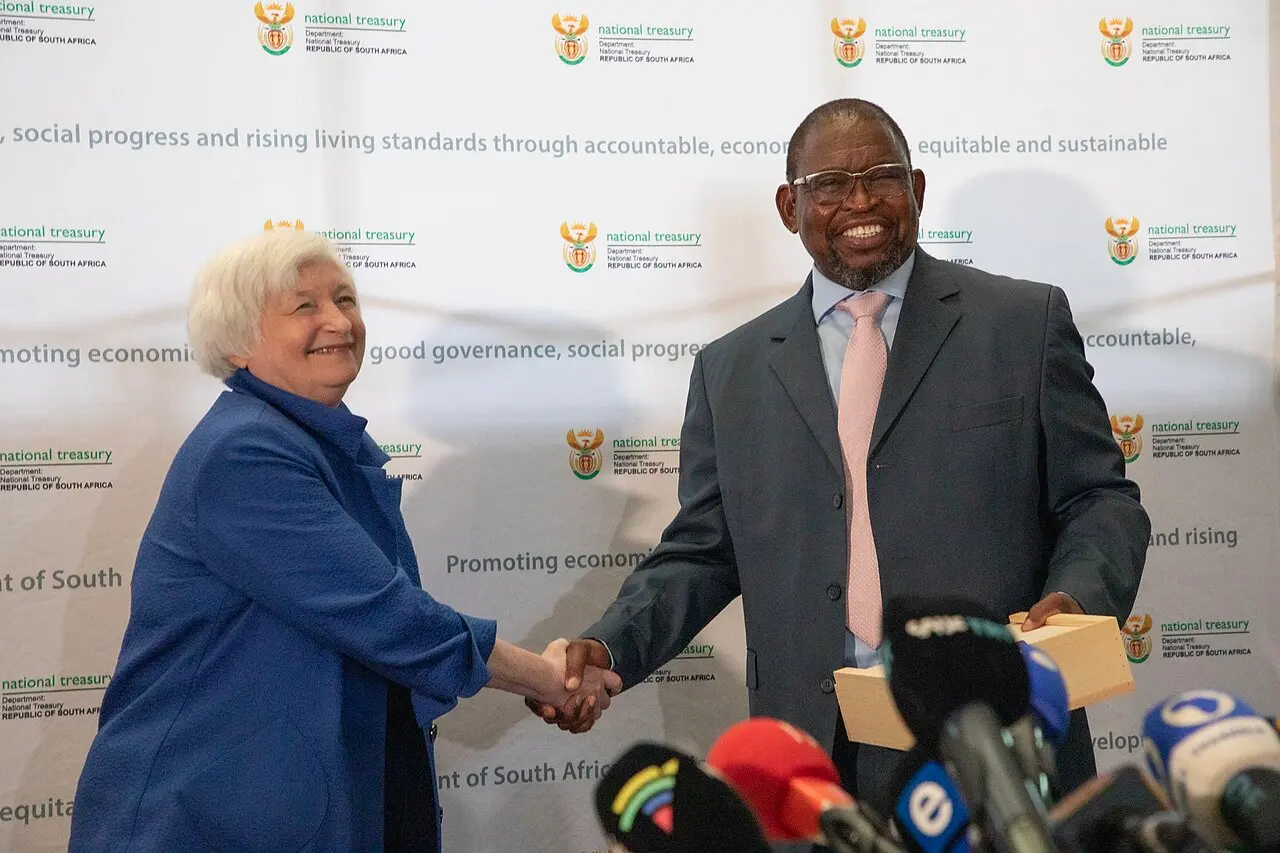
South African union NEHAWU has responded to Finance Minister Enoch Godongwana’s presentation of the 2026 Medium-Term Budget Policy Statement. It criticises a strategy of spending restraint and debt stabilisation that it considers insufficiently suited to unemployment, poverty and inequality.
South Africa’s NEHAWU trade union criticised the fiscal consolidation and debt stabilisation strategy presented as part of the 2026 Medium-Term Budget Policy Statement. The organisation was responding to Finance Minister Enoch Godongwana’s presentation of the document in Cape Town, according to a statement from NEHAWU.
The union said that containing public spending risked weakening essential services while South Africa faced economic stagnation, unemployment, poverty and inequality. It noted that gross domestic product had fallen by 0.2% in the second quarter of 2026, resulting in the loss of 345,000 jobs during that period.
NEHAWU said annual growth of at least 3% was needed to begin reducing the employment crisis, while 43.8% of the population was not working and was living in poverty, according to its figures. The budget statement forecasts growth of 1.2% in 2026, followed by 1.6% in 2027, 1.8% in 2028 and 2% in 2029. The 3% threshold would not be reached until 2034, according to the projections presented by the minister.
The criticism comes after South Africa’s growth forecast for 2026 was revised down to 1.2%, in figures published on 21 October. It also follows the announcement of a fiscal anchor law in 2027 and opposition calls for reforms targeting 3.5% growth, published on 22 October.
Summary produced with the help of artificial intelligence tools, under AFREEQUE’s editorial responsibility.