Former candidate Venâncio Mondlane says his trial is politically motivated
By the AFREEQUE newsroom, based on Agência de Informação de Moçambique
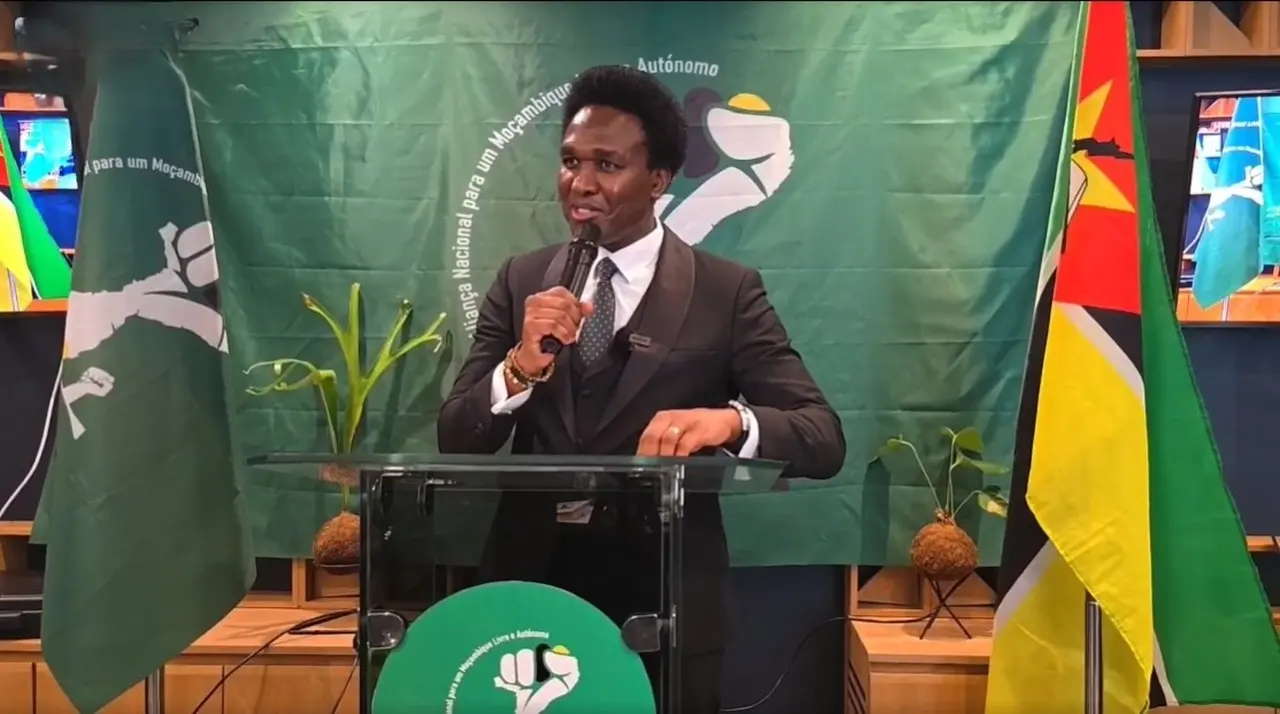
On the second day of hearings, the defence of Venâncio Mondlane, a former presidential candidate, says the trial linked to the 2024 post-election protests aims to exclude him from future elections. It challenges the charges, citing a district-level prosecutor and irregular proceedings over terrorism, according to the Mozambique Information Agency.
Former Mozambican presidential candidate Venâncio Mondlane believes that his trial, which opened in Maputo over the 2024 post-election protests, is politically motivated and intended to prevent him from taking part in future elections, his defence team argued on Wednesday during the second day of hearings, according to the public agency Agência de Informação de Moçambique.
The position is set out in the defence’s challenge to the prosecution’s charges, which accuse Mondlane of five offences linked to events following the 2024 general elections. The reading of the challenge lasted approximately an hour and a half. The lawyers are seeking to have the charges declared null and void, citing what they describe as insurmountable irregularities in the investigation of the case.
They argue in particular that the public prosecutor responsible for the investigation was at district level, whereas the nature of the alleged offences required, in their view, a prosecutor at provincial level. The defence also maintains that the terrorism-related offences should have been investigated by a legally competent authority, which it says was not the case. “This criminal trial is intended to exclude a politician from future elections,” the defence said.
On the substance of the case, the lawyers recall that the protests arose from the challenge to the results of the 2024 general elections following alleged irregularities. They refer to the Constitutional Council’s ruling, which validated and proclaimed the results while, they say, acknowledging irregularities during voting and counting. This acknowledgement gave Venâncio Mondlane the right to demonstrate alongside his supporters to demand clarification, they argue.