URGENT
🌍 WorldTechnology

AI could reduce the cost of financial cyberattacks

By , based on Weekend Post and Seneweb

AI could reduce the cost of financial cyberattacksIllustrative image · Tima Miroshnichenko · Pexels · Licence Pexels

Artificial intelligence could make financial cyberattacks cheaper and more accessible, particularly by facilitating phishing, voice impersonation and the identification of computer vulnerabilities, according to Seneweb. The reported theft of 6.36 billion dollars from Binance illustrates the risks associated with the compromise of transaction authorisation systems and the speed of fund transfers.

On 29 October, assets worth approximately 6.36 billion dollars were transferred from Binance wallets across ten blockchains, with most of the movements taking place within about 20 minutes, according to TRM Labs and Chainalysis. A technical analysis by TRM Labs published on 30 October identified indications that the platform’s internet-connected wallet signing systems had been compromised.

Christian Haschek, a cybersecurity consultant, believes the main risk lies in the speed of transfers after control of the devices authorising transactions has been taken over. He points out that multiple signatures, hardware security modules and cold storage do not guarantee sufficient protection when the equipment or the people responsible for approvals are compromised. An infected laptop could, in particular, have served as an entry point into the signing process.

Recovering the assets presents another difficulty. TRM Labs estimates that approximately 2.7 billion dollars were frozen or removed from the hackers' control, notably thanks to intervention by stablecoin issuers Tether and Circle.

Agnes Aistleitner, co-founder of First Circle Capital, expects spending on transaction monitoring, fraud prevention and asset protection to increase. These additional costs could be passed on to customers. Financial institutions could also strengthen checks on large transactions, even if this means slowing down some transfers.

Share this article

Related stories

TikTok launches tool to detect AI-generated impersonations

TikTok has launched a global tool allowing public figures to detect and report AI-generated content that reproduces their appearance or identity without permission. Its gradual rollout is aimed in particular at politicians and highly followed accounts ahead of the 2027 European elections, notably in France, Italy and Greece, according to BFMTV. The platform aims to reduce the risk of electoral disinformation.

🌍 World · Source: Defimedia ·

South African business leaders propose 100 million rand fund for AI

Andile Ngcaba, head of Convergence Partners and Solcon Capital, is proposing a 100 million rand fund to finance computing infrastructure for South African start-ups specialising in artificial intelligence, according to IOL. He has pledged to contribute 25% of the amount personally and wants to mobilise development finance institutions and private partners around the initiative, which Cyril Ramaphosa could launch during a forthcoming state of the nation address.

🇿🇦 South Africa · Source: SAnews ·

Chinese AI models gain ground against Anthropic and OpenAI

Open artificial intelligence models from DeepSeek, Moonshot AI, Z.ai and Alibaba are gaining ground among businesses. Their lower cost and ability to be installed on clients' internal servers are increasing commercial pressure on Anthropic and OpenAI, according to Le Monde.

🇨🇳 China · Source: Le Monde ·

Cassava seeks up to $1 billion for Nvidia chips

Cassava Technologies, an African technology group founded by Zimbabwean billionaire Strive Masiyiwa, is seeking to raise up to $1 billion to acquire Nvidia chips. Most of the funds would be used to develop data centres across the continent and strengthen Africa’s computing capacity for artificial intelligence, according to Bloomberg.

🇿🇼 Zimbabwe · Source: Mercado ·

🌍 Latest from World

US military deactivates helicopter squadron in South KoreaUS military deactivates helicopter squadron in South KoreaUS forces in South Korea have deactivated the 5th Aviation Squadron of the 17th Regiment, based at Camp Humphreys. The unit operated Apache helicopters and reconnaissance drones; the military says the reorganisation will change neither its mission nor its commitment to defending South Korea.All World news →

Technology

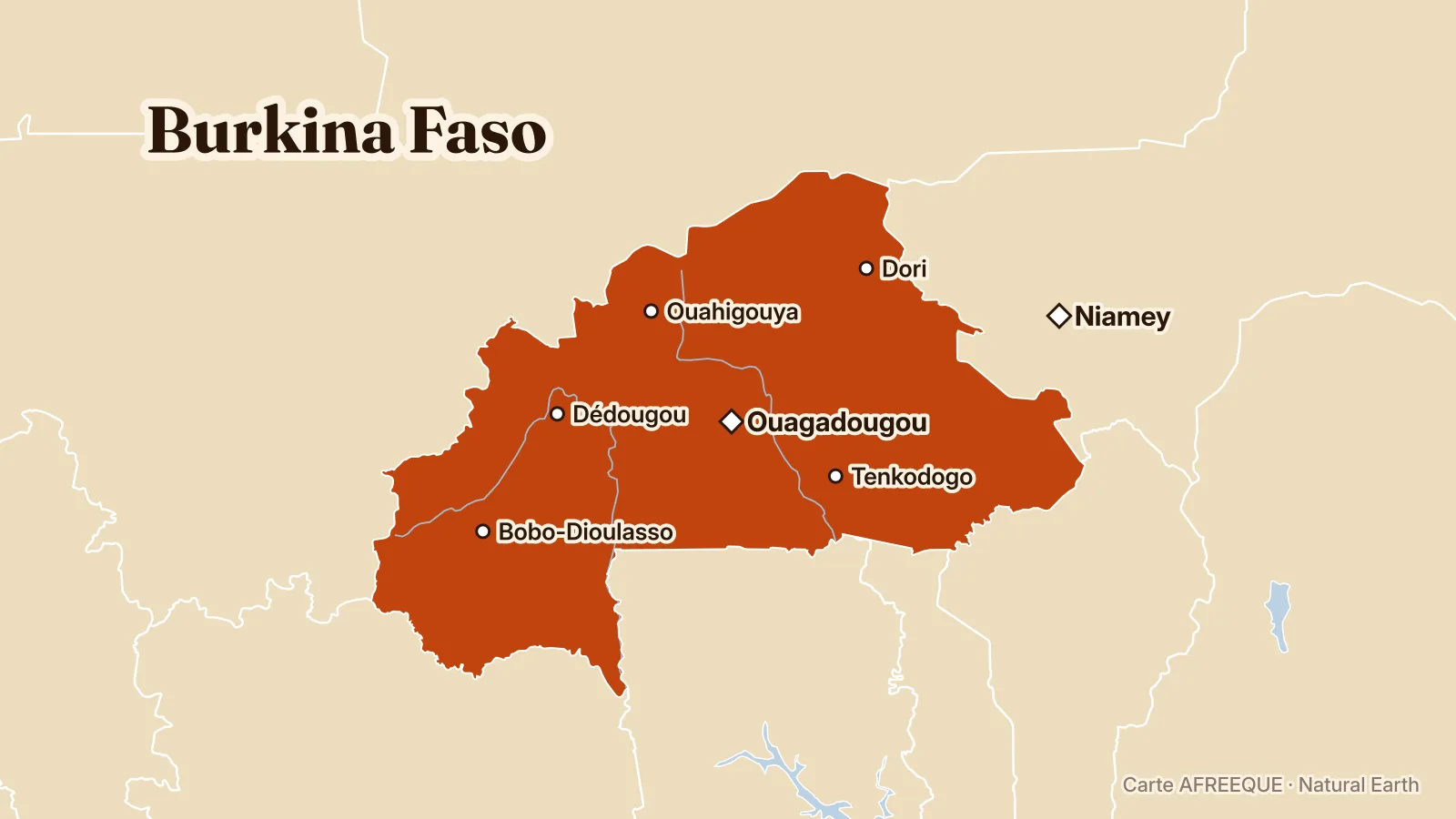
Map: Burkina FasoOrange Burkina denies hacking of its Max it applicationOrange Burkina operator says there has been no intrusion into its systems, despite social media rumours of hacked Orange Money accounts. It attributes the fraud to malware and remote control of phones, while the old version 1.0 of Max it has been deactivated and replaced by Max it 2.0, according to Netafrique.All Technology news →

The week in Africa

This week’s highlights

  1. Washington accuses EU of industrial overcapacity in trade dispute🇺🇸 United States
  2. Libyan National Army vows to retaliate against Ukraine🇱🇾 Libya
  3. Ugandan general Muhoozi says he ordered incursion into DR Congo🇨🇩 DR Congo
  4. Court overturns parliamentary report targeting President Ramaphosa🇿🇦 South Africa
  5. Chinese AI models gain ground against Anthropic and OpenAI🇨🇳 China
All of this week’s highlights →

Africa in your inbox

Be the first to get our letter in English: the essentials from every region of the continent, free.

Free · one email a week · unsubscribe in one click. Your address is only used to send you the letter, never sold. Personal data

← Back to the news