Tshisekedi to take direct control of mining inspectorate to curb smuggling
By the AFREEQUE newsroom, based on Mercado, Mediacongo and Beto
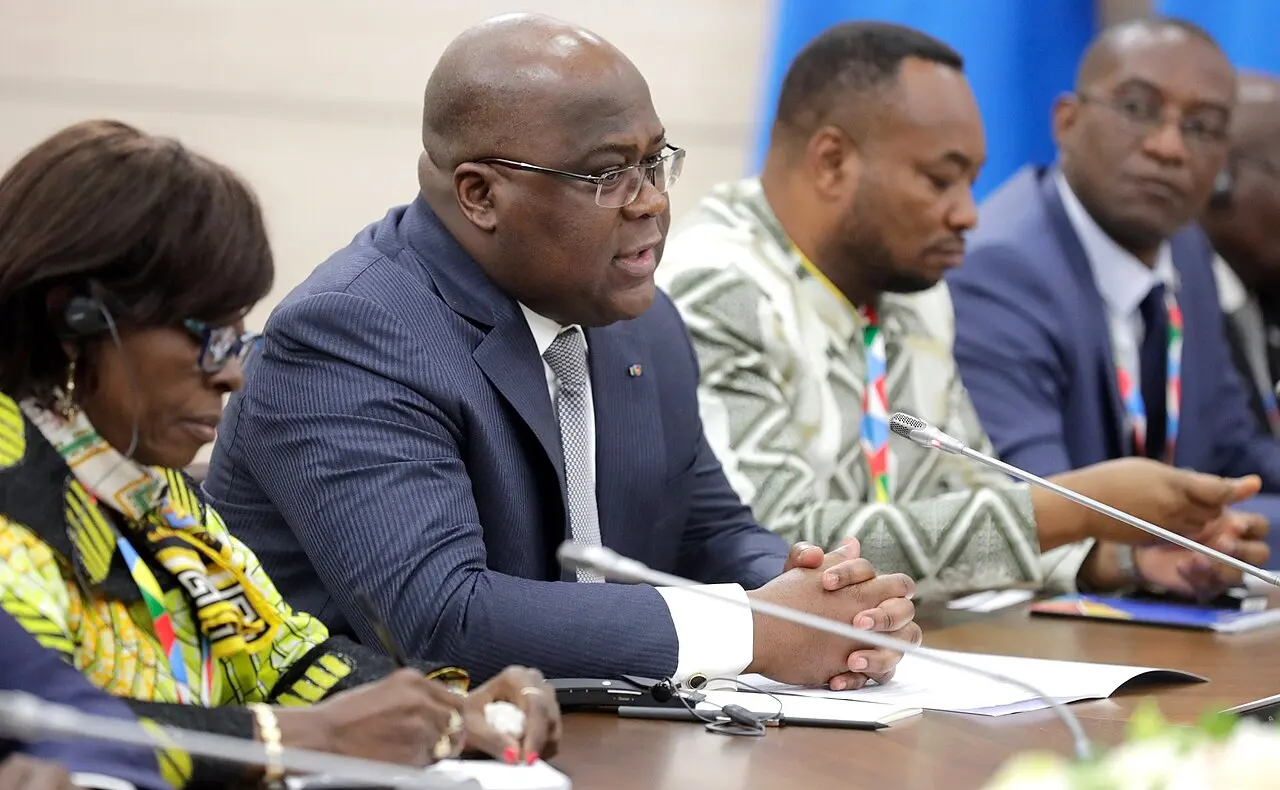
Félix Tshisekedi has decided to place the General Inspectorate of Mines under the direct authority of the Presidency of the Democratic Republic of the Congo to strengthen the fight against mining fraud and smuggling, according to Mercado. Announced on 20 November 2026, the reform is to be prepared within 45 days by Prime Minister Judith Suminwa Tuluka and the Minister of Mines. It follows the seizure of more than 500 trucks and thousands of tonnes of minerals.
The General Inspectorate of Mines is to be brought under the Presidency in the coming days. Félix Tshisekedi wants to receive strategic intelligence on mining activities directly and speed up interventions and sanctions against illegal operators. The change was announced at the Council of Ministers meeting on 20 November, according to Mercado.
The operation conducted in Lualaba and Haut-Katanga involved a commission made up of police officers, military personnel and officials from the Ministry of Mines. More than 500 trucks, vehicles and pieces of machinery were seized, along with several thousand tonnes of copper and cobalt. Most of the equipment came from the Menda concession, operated by Boss Mining, a subsidiary of Eurasian Resources Group, near Kolwezi. More than 60 foreign nationals were also arrested during a separate operation.
Justice Minister Guillaume Ngefa Atondoko Andali ordered investigations into suspected fraud, illegal mining and smuggling. Two weeks earlier, the Minister of Mines had suspended the head of the public body overseeing artisanal mining, accusing him of failing to act against illegal activities. Tshisekedi also reiterated his instructions for military personnel and other uniformed men illegally present at mining sites to leave.
For several years, illegal operators have occupied concessions belonging notably to Glencore, CMOC and Eurasian Resources Group. Some are said to benefit from the protection of Congolese military personnel. The situation has taken on an additional economic dimension amid competition between Washington and Beijing for access to the country’s strategic minerals. The DRC is the world’s largest cobalt producer and the second-largest copper producer. The red metal reached 14,875 dollars per tonne in London in September 2026. A US-backed consortium is also negotiating the acquisition of a 40% stake in Glencore’s Congolese operations.