Elon Musk gets green light for space data centres
By the AFREEQUE newsroom, based on BFMTV, Al Jazeera, L’essentiel, TechCrunch, Accra Mail and Le Matin

The US Federal Communications Commission (FCC) has authorised SpaceX to deploy up to one million satellites dedicated to orbital data centres, as part of its Starmind project, according to Al Jazeera. The decision, taken on 25 November, aims to meet growing demand for computing power linked to artificial intelligence. The programme has a deployment timeline that could extend to 2040, despite objections from competitors and concerns about the space environment.
SpaceX will be able to set up a constellation of up to one million computing satellites as part of Starmind, after receiving conditional authorisation from the FCC, according to Al Jazeera. The approval covers devices positioned between 500 and 1,002 kilometres above Earth, designed to process data that will then be used on the ground.
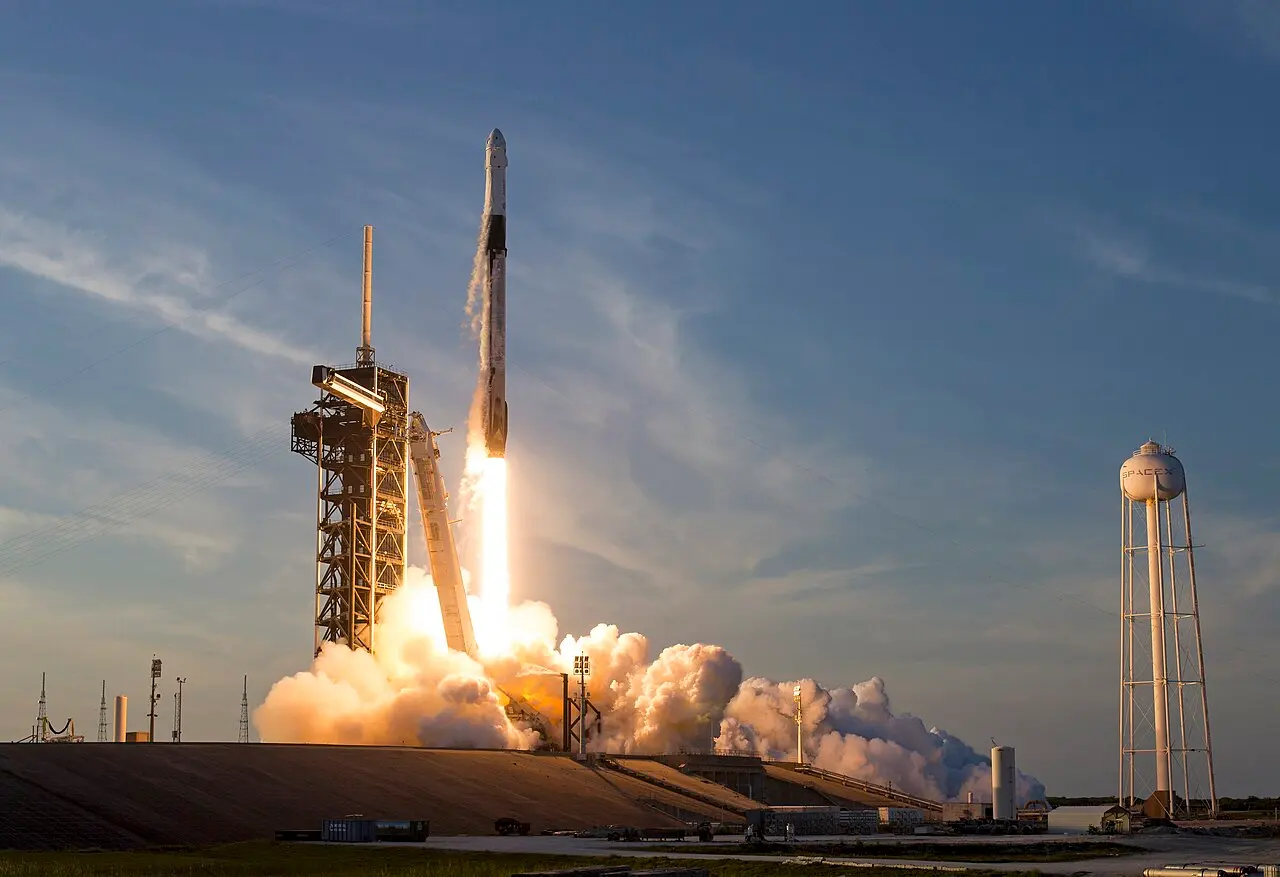
Elon Musk plans the first launches in the fourth quarter of 2027, with the programme accelerating in 2028. The company must have placed a first satellite in orbit before 2033, while the authorisation covers later stages up to 2040. SpaceX intends to rely on its own rockets, which have already flown several hundred missions, as well as a partnership with Nvidia to equip the satellites with Vera Rubin processors adapted to space conditions.
The devices will mainly use optical links. Backup radio communications will allow control from Earth to be maintained in the event of a failure of the main system. Deployable radiators will be used to dissipate the heat produced by the computing equipment. The radiation resistance of the processors nonetheless poses an additional technical challenge. A heliosynchronous orbit could allow the satellites to enjoy almost continuous sunlight, with an energy yield announced as higher than that of terrestrial facilities.
Amazon, Viasat and the American Astronomical Society challenged the project, notably over the risks of collision, the saturation of orbits, possible disruption to astronomical observations and environmental consequences. The FCC set aside some objections concerning scientific research, considering that they did not fall within its remit. SpaceX still needs to obtain waivers to manage its satellites at the end of their missions, particularly those above 600 kilometres, which could be moved to other orbits rather than re-entering the atmosphere within five years of being retired.