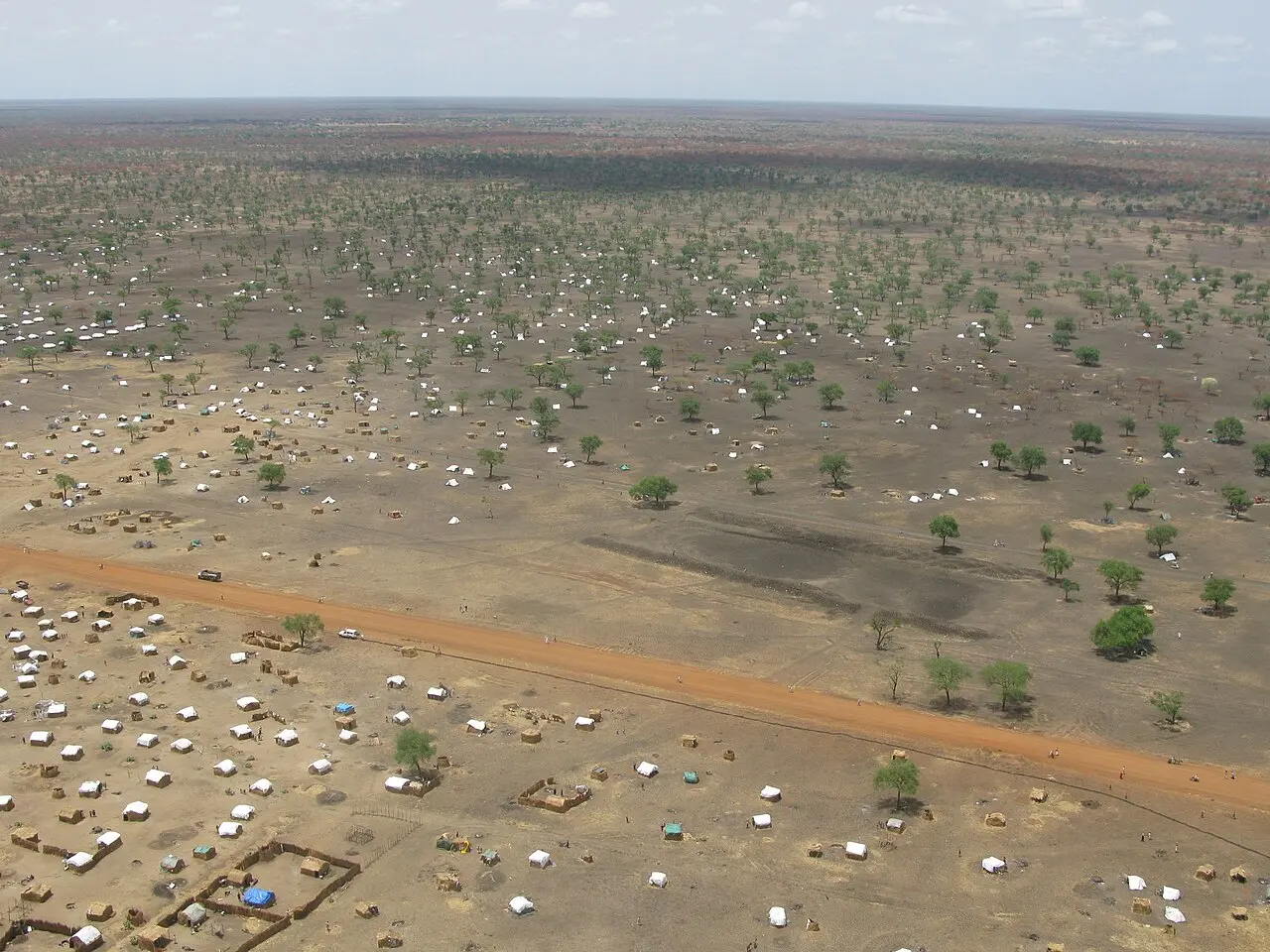
According to UNHCR, up to 50,000 people have crossed the border from the Moyale area, up from 36,000 previously recorded. Housed in temporary shelters and at the Al Huda camp, they lack water and housing, according to local authorities.
According to UNHCR, up to 50,000 people have crossed the border from the Moyale area, up from 36,000 previously recorded. Housed in temporary shelters and at the Al Huda camp, they lack water and housing, according to local authorities.
The UK advises its citizens against all but essential travel to Moyale, a Kenyan town bordering Ethiopia, after incursions left two people dead and several injured. The measure comes as more than 50,000 people have crossed into Kenya to flee fighting in Ethiopia, according to the Kenya Red Cross.
The TPLF claims to have killed 500 Ethiopian soldiers and wounded 800 others in fighting near Aksum, in Tigray. The toll, which has not been independently verified, follows weeks of clashes raising fears of a new major war in northern Ethiopia, according to Africanews.
Tigray’s interim administration plans to resume salary payments this month for public employees who were legally recruited and have returned to their posts. Tewodros Aregay, head of economic affairs and reconstruction, told Fana Media Corporation that financial preparations had been completed as part of the restoration of regional institutions.
More than 750,000 people displaced by the Tigray war are still waiting to return home, four years after the Pretoria peace agreement, according to RFI. Nearly 50,000 live in the Seba Kare camp, outside Mekelle, while their region of origin, Western Tigray, is administered by Amhara; RFI gathered their accounts of their living conditions and expectations.
The United Nations High Commissioner for Refugees and the Kenya Red Cross are distributing coded wristbands to displaced Ethiopian families in the Harhosa and OMC camps in Moyale. The operation is intended to facilitate refugee registration and the delivery of humanitarian aid, according to Citizen Digital.
The Kenya National Commission on Human Rights is calling for urgent humanitarian aid in Moyale, where around 40,000 Ethiopians have fled unrest, according to reported figures. The influx is placing growing pressure on access to food, water, shelter and healthcare, the commission warns.
More than 40,000 people have fled unrest in Ethiopia and crossed the border into Moyale, Kenya, according to the Kenyan National Commission on Human Rights. In a statement published on 27 October, the institution called on national and local authorities to provide healthcare, water, sanitation facilities and shelter for the refugees, Citizen reports.
Tigray’s interim administration is stepping up efforts to revive trade and improve supplies of essential goods, said Tewodros Aregay, head of economic affairs and reconstruction. It says disrupted public services and infrastructure networks have resumed operations, while supplies of food and other everyday goods are gradually improving.
Ethiopian soldiers helped vulnerable farmers in Adet, Tigray, harvest their mature teff to prevent losses. Military authorities described the assistance as support for local communities; the operation took place on 27 October 2026, according to Fanamc.
The Kenya Red Cross has activated health services in the six camps hosting families displaced by cross-border violence in Moyale, Marsabit County. Its volunteers screen children and mothers for malnutrition and distribute nutritional supplements and essential supplies, according to Capital FM.
Clashes between forces from Ethiopia’s Somali and Oromia regions have killed at least five people, according to the Acled NGO. The conflict, linked to territorial disputes, has driven thousands of Ethiopians across the border, with up to 36,000 people arriving in Moyale, Kenya, according to the Marsabit County commissioner cited by RFI.
Fierce fighting between Somalis and Oromos has continued for a third day in Moyale, a town on the Ethiopia-Kenya border. Residents have fled to Kenya, while Ethiopia’s federal government and the Somali administration have not yet responded, Puntland Post reports.
Hundreds of Ethiopians, mainly women, children and young people, crossed into Kenya at Moyale to flee tensions between Ethiopia’s Oromia and Somali regions. Kenyan police also reported gunfire from the Ethiopian side from 22 October and placed security forces on alert, according to a report from the Moyale police station.
Debretsion Gebremichael, leader of the Tigray People's Liberation Front (TPLF), says his movement's forces are continuing to fight the Ethiopian army and have won tactical victories. The statement comes a month after fighting resumed, as the government claims control of the region's main cities, reports RFI.
Tigray interim administration security official Brigadier General Gebre Egziabher Beyene is calling on residents to prioritise peace and development over renewed conflict. He accuses the Tigray People's Liberation Front of obstructing the Pretoria agreement, particularly the disarmament and reintegration of fighters, according to Ethiopian agency Fanamc.
New clashes between Oromo and Somali communities have erupted in Moyale, on the Kenya-Ethiopia border, after the disputed death of a 13-year-old girl. Several buildings were set on fire and residents were reportedly injured, while shops and schools closed, Kenyans reports.
Ethiopia’s government has placed Tigray under a six-month interim administration, a measure already reported on 16 October. The region continues to face political tensions and clashes, while former fighters are registering to return to civilian life, according to the Zambian Observer.
Fanamc presents the people of Tigray as wanting to turn the page on conflict and rebuild their daily lives by freeing themselves from the influence of the Tigray People’s Liberation Front (TPLF). The text portrays this shift as an aspiration for peace and development, without announcing any decision or concrete political change.
Ethiopian adviser Getachew Reda discussed developments in Tigray and the needs of its newly established interim administration with Guang Cong, the UN special envoy for the Horn of Africa. The talks also covered conflicts in Sudan, upcoming elections in South Sudan and the situation in Somalia, according to Getachew Reda.
The Ethiopian army has retaken Mekele and advanced to the outskirts of the Eritrean border, bringing the forces of the two countries closer together. Magnus Taylor, deputy director for the Horn of Africa at the International Crisis Group, believes the advance could heighten tensions and raise fears of a direct clash between Ethiopia and Eritrea.
The Ethiopian government has established a six-month interim administration to govern Tigray, tasked with restoring security, rebuilding institutions and infrastructure, and preparing elections. The decision follows one by the House of Federation and is in line with the Ethiopian Constitution, according to the Ethiopia News Agency (ENA).
US Secretary of State Marco Rubio called on Ethiopian Prime Minister Abiy Ahmed to prioritise dialogue to ease tensions between Ethiopia and Eritrea. During a telephone call on 14 October 2026, Rubio backed de-escalation and said the region could not withstand further conflicts, according to the US State Department.
Ethiopian federal forces and their allies are closing in on a town in Tigray near the Eritrean border, according to a pro-government militia commander and a resident. The advance comes as tensions between Ethiopia and Eritrea worsen, the Associated Press reports.
The United States has warned Ethiopian Prime Minister Abiy Ahmed against any action that could lead to a breach or crossing of the border with Eritrea. Secretary of State Marco Rubio called for de-escalation and respect for territorial integrity, according to a statement from the US State Department.
US Secretary of State Marco Rubio called on Ethiopia and Eritrea to respect the sovereignty and territorial integrity of their neighbours. The warning came amid renewed concern over regional tensions, during a call with Ethiopian Prime Minister Abiy Ahmed, according to the US State Department.
US Secretary of State Marco Rubio urged Ethiopia and Eritrea to ease tensions and respect their neighbours’ sovereignty during a call with Ethiopian Prime Minister Abiy Ahmed. The US State Department called for a settlement through dialogue amid fears of a new conflict between the two countries, according to its statement.
Ethiopian federal forces and their allies entered Adwa and Axum, two major cities in Tigray previously controlled by Tigrayan rebels, without a fight. These advances strengthen the federal government’s grip on the region and leave the future of the Tigray People’s Liberation Front in doubt, according to RFI.
Eritrea has accused Ethiopia of preparing for war and asked the UN Security Council to condemn statements from Addis Ababa, while Eritrean troops are deployed in Tigray. A foreign security source estimates their number at between 5,000 and 8,000, the ANG news agency reports, amid acute tensions between the neighbouring countries.
Residents of Tigray expressed relief and supported the federal government after the region was retaken from the remnants of the Tigray People’s Liberation Front. In Adi Gudem, they called for peace, the return of essential services and the resumption of economic activity, according to Fanamc.
Eritrean Foreign Minister Osman Saleh has asked the UN Security Council to condemn what he presents as a war announced by Ethiopia. In a letter dated 10 October, he also requested preventive measures against a possible Ethiopian attack, Caasimada Online reports.
Ethiopia accuses Eritrea of sending soldiers up to 60 kilometres into its territory and invokes self-defence before the UN Security Council. Asmara rejects the accusations and says Addis Ababa is waging a war of aggression to regain access to the port of Assab, according to Reuters and the Associated Press.
Ethiopian drones reportedly struck vehicles carrying Eritrean soldiers near Adigrat in the Tigray region, after they entered Ethiopian territory. ACLED, a US conflict-monitoring organisation, reports that Eritrean troops began withdrawing under pressure from the strikes, amid high tensions between the two countries.
Witnesses say forces linked to the Tigray People’s Liberation Front are forcibly recruiting boys as young as 15, as well as men, in Ethiopia’s Tigray region. The British newspaper The Guardian published the testimonies on 6 October, amid renewed fighting, according to the media outlet Fanamc.
The Ethiopian federal army and an allied Tigrayan militia control Mekele, the capital of Tigray. This advance is fuelling fears that the conflict could spread beyond Ethiopia, while their rivals meet in El-Alamein, Egypt, reports France 24.
Ethiopia’s federal army has taken control of Mekelle, capital of the Tigray region, after the withdrawal of Tigray People’s Liberation Front (TPLF) forces. The troops entered the city without major clashes, as the conflict in northern Ethiopia entered a new phase, according to AFP cited by Caasimada Online.
Militias allied to Ethiopian federal troops entered Mekele, the capital of the Tigray region, after Tigrayan forces had largely left the city several hours earlier. The advance marks a new stage in the federal offensive, according to local witnesses cited by France 24.
Ethiopian federal forces have entered Mekele, the regional capital of Tigray, after Tigrayan troops allied with the government retook the airport. The airport had been controlled since 23 September by rebels from the Tigray People's Liberation Front, RFI reports, while federal forces were also advancing in Afar.
Artillery fire in southern Tigray, Ethiopia, has killed four of around 40 civilians wounded in recent days, according to a medical source in Mekele cited by AFP. The shelling follows the resumption of fighting on 23 September between federal forces and the Tigray People’s Liberation Front, Sonapresse reports.
Fighting has intensified in Ethiopia’s Tigray region, killing 52 civilians. A medical staff member gave the toll to the BBC, which reported on the escalation of clashes and their impact on civilians.
Fighting has resumed between Ethiopia’s federal government and Tigray’s rebel forces, following several days of tensions in the north of the country. The renewed hostilities have revived the risk of a large-scale conflict, after the 2020-2022 war that left hundreds of thousands dead, according to the sources cited.
Ethiopia’s federal authorities have suspended Tigrai TV, the Tigray public broadcaster, indefinitely. They have also banned media outlets from relaying its reports, a measure announced on 21 September, according to the Ethiopian authorities cited in the article provided.
The Ethiopian army says it has repelled attacks by Tigrayan forces and their allies in the north of the country. In its first statement since fighting resumed, it said hostilities began in an area of the Amhara region near the border with Tigray.
Ethiopian and Tigrayan authorities accuse each other of launching offensives, raising fears of a renewed war in the northern Ethiopian region. The accusations mark a fresh rise in tensions, with no toll or responsibility for the attacks established in the available information.